About Ahmedabad
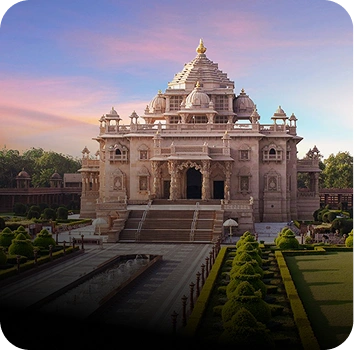
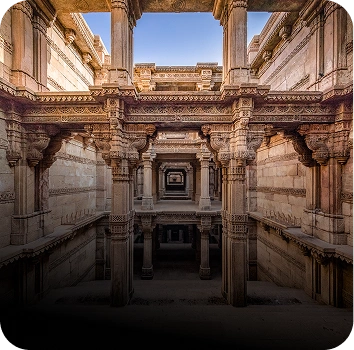
Ahmedabad, often called Amdavad has been inhabited since the 11th century and has been an integral part of several dynasties and empires. Sultan Ahmed Shah is regarded as the founder of Ahmedabad city after he laid the foundation for a walled city near the bank of Sabarmati River on 26th February 1411. In modern...
Ahmedabad, often called Amdavad has been inhabited since the 11th century and has been an integral part of several dynasties and empires. Sultan Ahmed Shah is regarded as the founder of Ahmedabad city after he laid the foundation for a walled city near the bank of Sabarmati River on 26th February 1411. In modern times Ahmedabad has emerged to be one of the largest economic hubs of India and is the 2nd largest producer of cotton. Cricket is a big sport in India and unsurprisingly Ahmedabad is home to Narendra Modi Cricket Stadium, at Motera, which can accommodate 132,000 spectators, making it the largest stadium in the world! In 2012 Ahmedabad was chosen as India’s best city to live in by The Times of India. The Ease of Living Index classified Ahmedabad as the third-best city in India to live in the year 2020.
View More
Geography
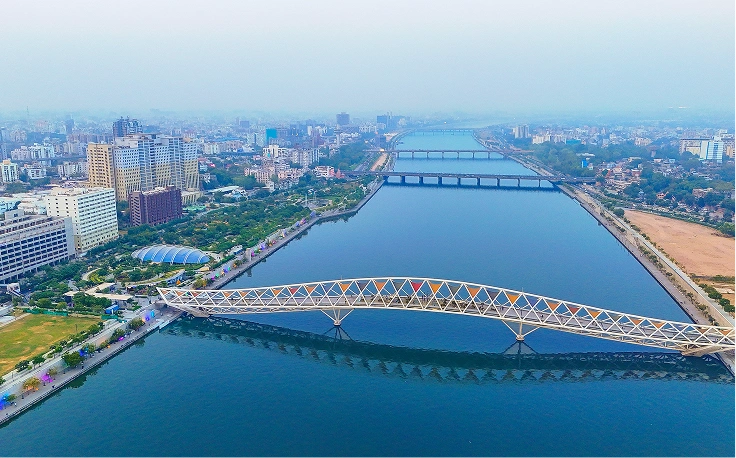
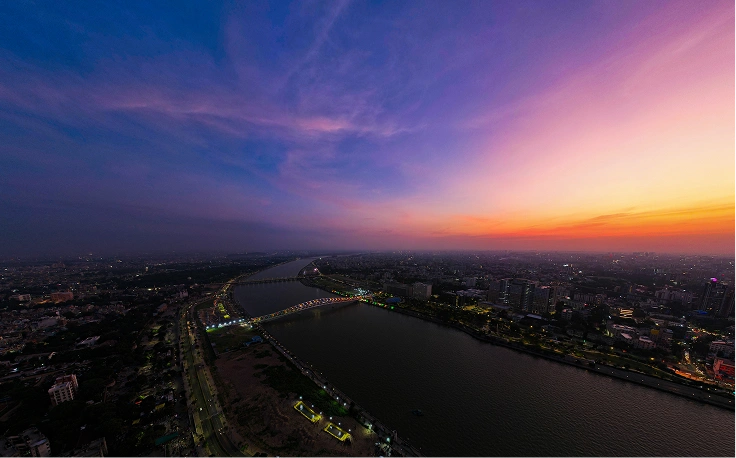
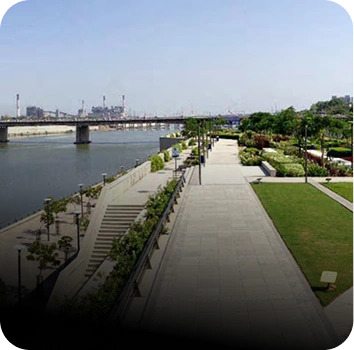
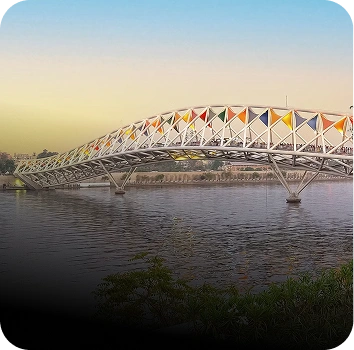
The Sabarmati river flows through the middle of Ahmedabad and is the heart of the city. The river divides Ahmedabad into two physically distinct eastern and western regions. On the eastern bank old Ahmedabad still stays intact with its centuries-old houses, markets and traditions. The old Ahmedabad is particularly characterised by huge Bazaars (markets), pols (a type of residential housing system)...
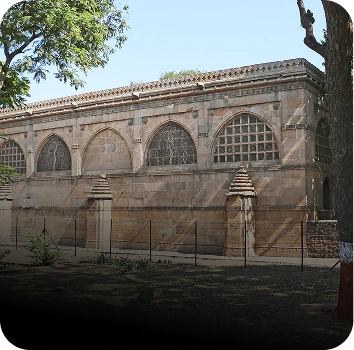
The Sabarmati river flows through the middle of Ahmedabad and is the heart of the city. The river divides Ahmedabad into two physically distinct eastern and western regions. On the eastern bank old Ahmedabad still stays intact with its centuries-old houses, markets and traditions. The old Ahmedabad is particularly characterised by huge Bazaars (markets), pols (a type of residential housing system) and numerous places of worship such as temples, mosques, Agiyari, Derasar and more. This has allowed Ahmedabad to become India’s first-ever world heritage city declared by UNESCO.
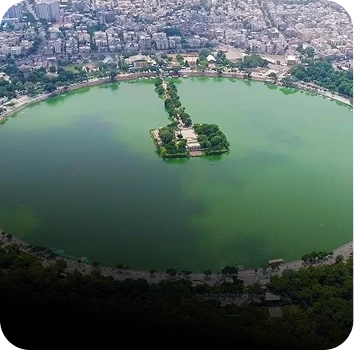
Moreover, Ahmedabad is also home to 3 lakes namely, Vastrapur Lake, Kankaria Lake, and Chandola Lake. The Kankaria lake is an artificial lake made by the Sultan of Gujarat in 1451. Most of the educational institutes in Ahmedabad are located in the western region. For this reason, several PGs in Ahmedabad are found there too. The geography of Ahmedabad is pretty simple and easy to navigate around as an individual living in a PG in Ahmedabad.
View More
Weather
It is important to mention the kind of weather you will experience in Ahmedabad. Basically, there are 3 seasons in Ahmedabad, summer, monsoon and winter. Apart from the monsoon season, the climate here is mostly dry. Summer is the dominant season from March to June when the average temperature goes up to 43 °C and the average minimum stays at around 24 °C. Expect moderate cold from November...
It is important to mention the kind of weather you will experience in Ahmedabad. Basically, there are 3 seasons in Ahmedabad, summer, monsoon and winter. Apart from the monsoon season, the climate here is mostly dry. Summer is the dominant season from March to June when the average temperature goes up to 43 °C and the average minimum stays at around 24 °C. Expect moderate cold from November to February with a maximum temperature of 30 °C and a minimum of 13 °C. During the summer season, it is best not to travel by two-wheeler at noon to avoid heat. The humid and warm climate of Ahmedabad makes it necessary to have air conditioners for the majority of the year.
Stay FLH Students & FLH Rersidences, completely understands this and offers AC room to the students and working professionals for a comfortable living experience.
View More